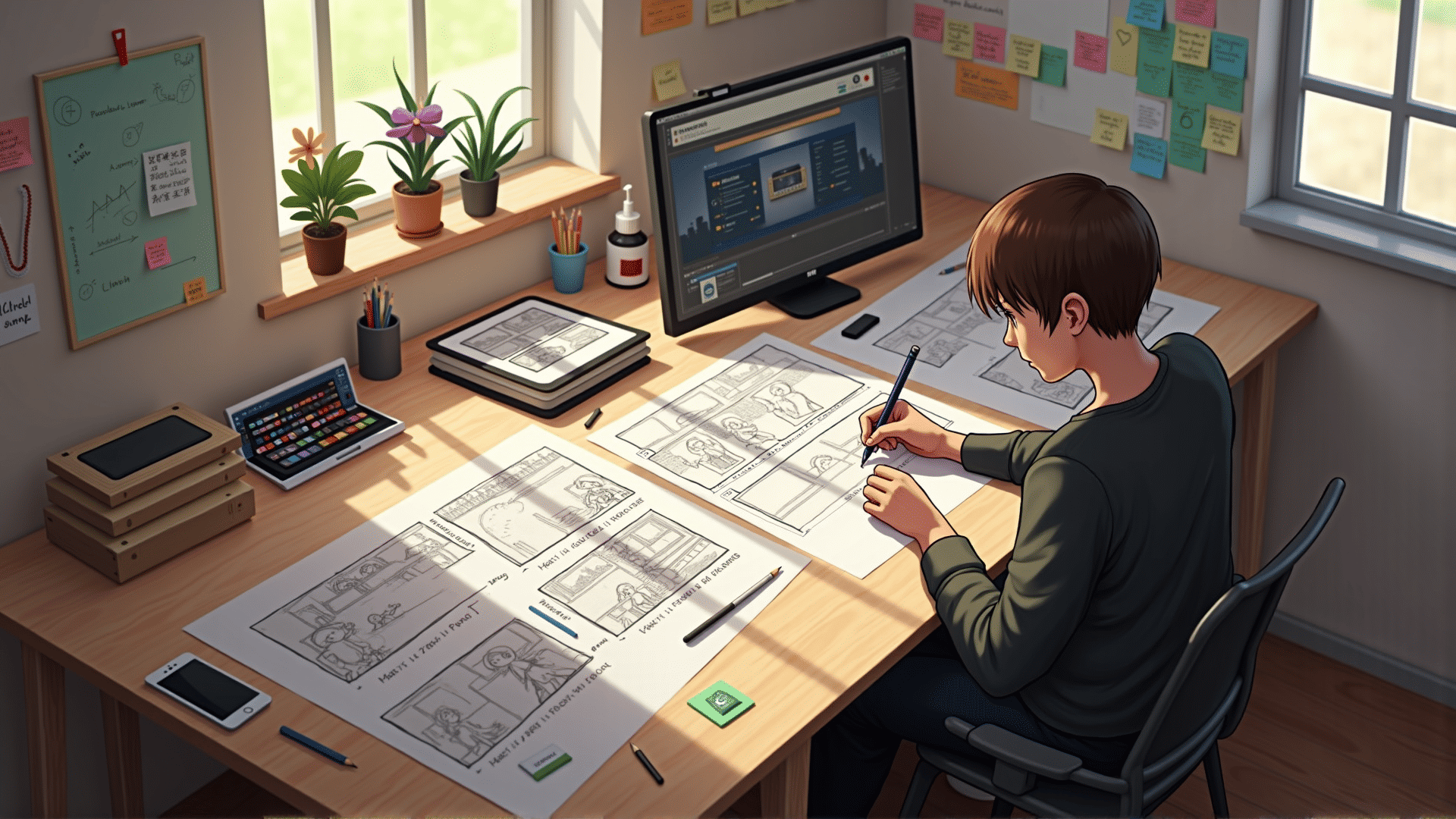
Storyboarding is a crucial step in the creative process, particularly in fields such as filmmaking, animation, and even event planning. By sketching out a sequence of events or scenes in visual form, storyboarding allows creators to plan effectively, providing a clear blueprint before embarking on the editing phase.
At its core, storyboarding is about visualization. It helps storytellers and creators imagine how their narrative will unfold, setting the foundation for a more structured and cohesive final product. This visual representation can consist of simple sketches or detailed illustrations, depending on the complexity and needs of the project.
The primary benefit of storyboarding is clarity. It offers a detailed map that can guide the production team, ensuring everyone has the same understanding of the project’s trajectory. This alignment minimizes misunderstandings and keeps the entire team on the same wavelength.
Another advantage lies in optimization. By visualizing the entire sequence beforehand, creators can identify any potential issues or weak points in the narrative. This foresight allows them to make necessary adjustments early on, saving valuable time and resources that might otherwise be wasted during later stages of production.
Moreover, storyboarding fosters collaboration. When a team has a tangible reference, it becomes easier to brainstorm and discuss ideas, facilitating better communication among members. Each person can contribute suggestions to enhance or refine specific parts of the project.
In addition to its benefits in planning and coordination, storyboarding is a useful tool for innovation. Creators are encouraged to experiment with different visual styles and narrative shifts. As the storyboard evolves, these creative processes often lead to unexpected and enriching developments that enhance the original concept.
For those new to storyboarding, starting with basic sketches suffices. These don’t have to be perfect; their primary purpose is to convey the key elements of each scene. As familiarity with the process grows, more detail can be added to refine the visuals and narrative flow.
In conclusion, storyboarding serves as a powerful tool for crafting compelling and structured projects. It bridges the gap between imagination and reality, turning abstract ideas into concrete representations. Through storyboards, creators can visualize their stories, align their teams, and truly bring their visions to life.